
How Much Power Do You Actually Need in a Van? (2026 Guide)
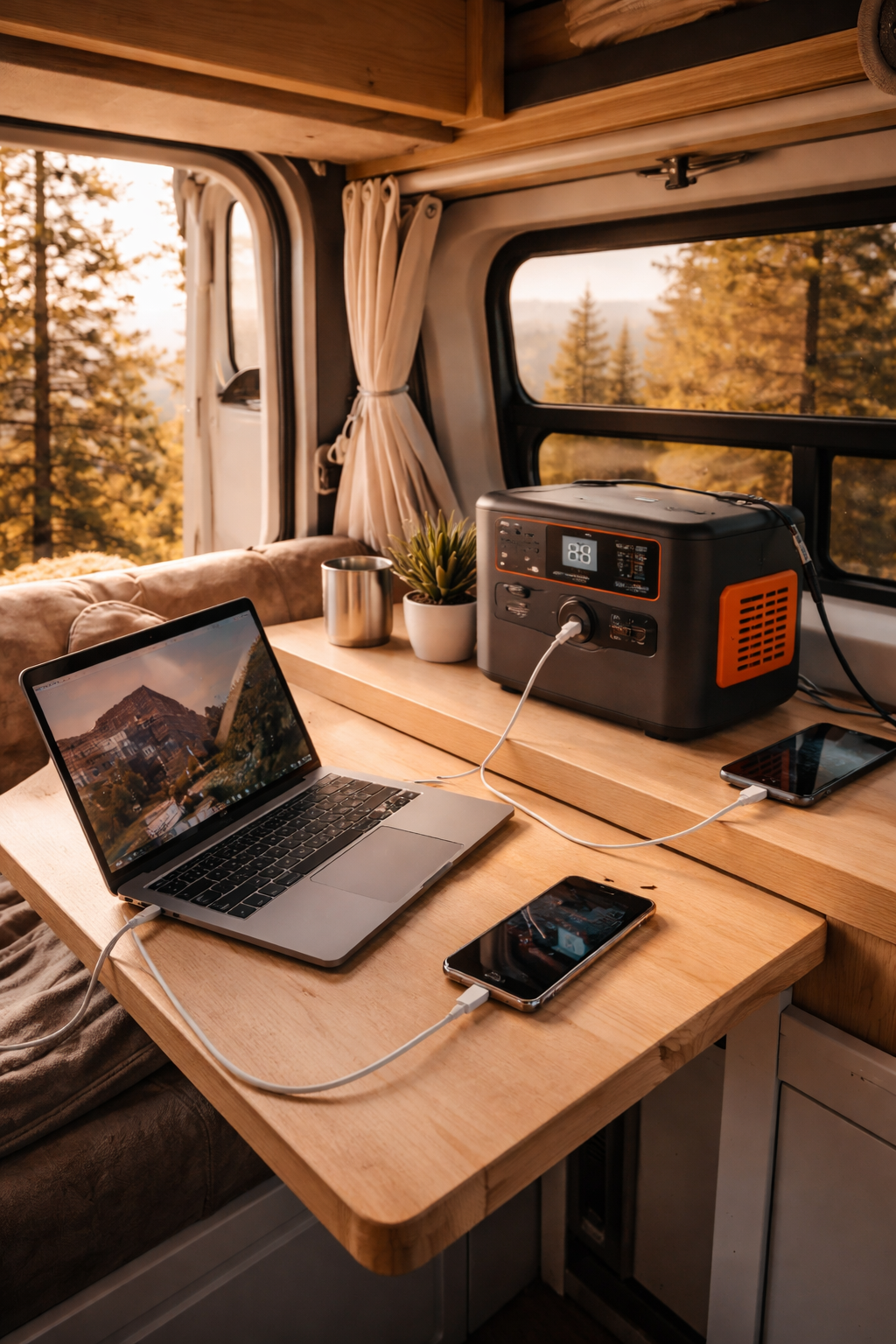
This post may contain affiliate links. If you buy through them, we may earn a commission at no extra cost to you.
Last updated: March 2026
Power is one of the most confusing parts of van life.
Most beginners either overspend on capacity they never use or underestimate daily demand and run out of battery when it matters most.
This guide is a practical framework, not a complicated electrical lesson. We will estimate your real van life power needs, convert that into daily watt-hours, and match it to a setup tier that makes sense.
If you have been asking how much power you need in a van, how much battery power for van life is enough, or how much electricity van life uses day to day, this is your baseline.
Why Power Planning Matters in Van Life
Power affects comfort, food storage, internet reliability, and work consistency. When power breaks, everything else starts to wobble with it.
A weak plan means constant adaptation: driving to recharge, changing meal plans, skipping work blocks, and troubleshooting instead of traveling.
That repeated friction is one of the fastest burnout drivers in van life.
Freedom gets fragile when your systems don’t work.
For remote workers, power planning is even more critical. Missed charging windows can become missed deadlines. A stable setup protects your workflow, not just your convenience.
The 5 Biggest Power Draws in Most Van Setups
Most daily usage comes from a small set of recurring devices. Estimate these first and your van life power calculator becomes much simpler.
Laptop
Typical range: 120-240Wh/day
Light browsing and admin work will sit near the low end. Full remote-work days with calls, uploads, and longer screen time push usage higher.
12V Fridge
Typical range: 300-500Wh/day
For many vans, this is the largest recurring load. Ambient heat, airflow, insulation quality, and compressor cycling all change daily draw.
Roof Fan
Typical range: 30-100Wh/day
Short daytime ventilation sits low. Running overnight in hot climates can move this load up quickly.
Lights
Typical range: 20-60Wh/day
LED lighting is efficient, but evening use still adds up. Keep it in your estimate even though it looks small on paper.
Internet / Hotspot
Typical range: 20-80Wh/day
This is often forgotten by beginners. Hotspot devices, charging overhead, and connectivity tools are part of real van life electricity use.
Simple Van Life Power Calculator
Start with a daily estimate table like this:
| Device | Daily Usage Estimate |
|---|---|
| Laptop | 180Wh |
| 12V Fridge | 400Wh |
| Fan | 60Wh |
| Lights | 40Wh |
| Hotspot | 40Wh |
| Total | 720Wh |
If your daily total is around 300Wh or less, you have light demand.
If you land around 500-800Wh, you are in mid-range and usually remote-work capable with the right recharge routine.
If you are at 900Wh+, you are building a heavier full-time setup and need more buffer.
Add 20-30% margin to your estimate so weather shifts, travel days, and heavier workloads do not break the system.
What Size Power Setup Matches Your Needs?
Lightweight Setup
The Jackery Explorer 300 Portable Power Station is a practical low-demand starter for short trips and basic charging.
It keeps the system simple while you gather usage data from real travel days.
- Best for weekend trips and low-load routines
- Best for charging phones, lights, and occasional laptop sessions
You will likely outgrow this tier once a full-time fridge or longer remote-work blocks become non-negotiable.
Mid-Range Setup
The EcoFlow River 2 Pro Portable Power Station is often the best balance for practical daily van use.
It supports a more complete system without forcing a complex electrical build on day one.
- Best for remote work plus a 12V fridge
- Best for daily charging with moderate reserve capacity
You may outgrow this tier if your daily consumption rises and recharge opportunities become less predictable.
Higher-Capacity Setup
The EcoFlow Delta 2 Portable Power Station gives more margin for heavier routines and full-time use.
It reduces recharge pressure and creates more flexibility when weather or schedule conditions change.
- Best for full-time van life with heavier daily draw
- Best for users who want more reserve and expansion room
You may outgrow this tier only when your setup scales into sustained high-load systems beyond normal starter use.
How Solar Changes the Equation
Solar can reduce recharge stress, but it does not eliminate planning. You still need an honest daily watt-hour estimate first.
The goal is simple: replace what you use each day, then leave margin for low-sun conditions and heavier-use windows.
If your system consumes more than you can consistently recharge, battery size alone will not save the setup.
Next guide: Van Life Solar Setup for Beginners.
Most Common Beginner Mistakes
- Buying too small and rebuilding too soon
- Ignoring how much 12V fridge load compounds over a full day
- Forgetting internet gear in the baseline estimate
- Assuming solar solves everything automatically
- Not leaving enough capacity margin
Best Starter Power Picks
- Jackery Explorer 300 Portable Power Station – Good for low-demand starter setups.
- EcoFlow River 2 Pro Portable Power Station – Best balance for most remote-work capable van setups.
- EcoFlow Delta 2 Portable Power Station – Better for heavier or full-time demand.
FAQ: Van Life Power Needs
How much power do I need for van life?
Most setups land between about 300Wh and 900Wh per day depending on travel style and gear. The fastest way to estimate accurately is to list your daily devices and total their watt-hours. Add margin so one heavy day does not collapse the system.
Can a portable power station run a 12V fridge?
Yes, if daily capacity and recharge routine match your real fridge draw. Many beginners can run a fridge successfully on a mid-range station. Consistent recharge discipline matters as much as battery size.
How many watt hours does a laptop use in a van?
A realistic range is usually 120-240Wh per day. Light sessions stay low, while full remote-work days with calls and uploads push higher. Use your actual workload pattern, not occasional-use assumptions.
Do I need solar right away?
No. Many new builders start with shore charging plus a portable station. Solar becomes more valuable after you understand daily demand and want longer off-grid autonomy.
Is 500Wh enough for van life?
It can be enough for lighter routines, but it is often tight for remote work plus fridge usage. If your system has recurring loads, 500Wh leaves less margin than most people expect.
What’s the best starter power setup for beginners?
For most first-time builders, a mid-range portable station is the safest starting point. It keeps setup simple while supporting real daily loads. You can scale from there using your own usage data.
How much battery capacity do remote workers need in a van?
Many remote workers need systems that comfortably support 500-800Wh daily with reserve margin. The right number depends on laptop hours, fridge demand, and internet uptime requirements. Stability is the target, not bare-minimum survival.
Related Guides
- Van Life Gear Starter Kit
- Real Van Life Budget: Startup + Monthly Costs
- Best 12V Fridges for Van Life
- Best Van Life Internet Setup for Remote Work
- Van Life Solar Setup for Beginners
Final Thoughts
You do not need a perfect power system on day one.
You need an honest estimate, enough margin, and a setup you can actually maintain.
When power is stable, van life gets simpler, work gets calmer, and the road stays sustainable.