
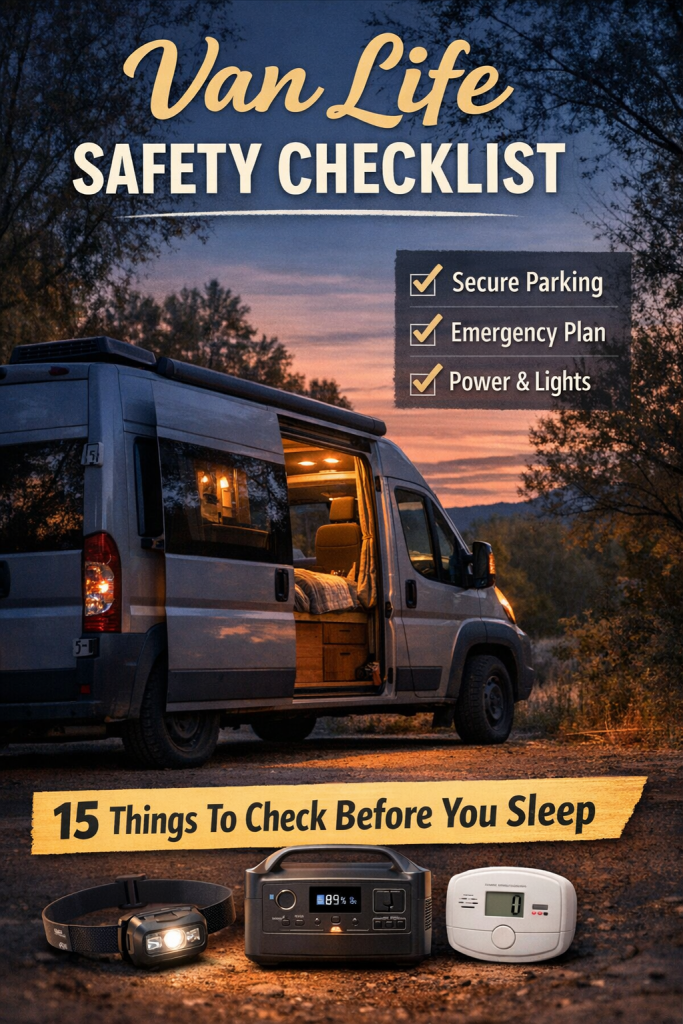
Van Life Safety Checklist: 15 Things to Check Before You Sleep
This post may contain affiliate links. If you buy through them, we may earn a commission at no extra cost to you.
Last updated: April 2026
Van life safety usually is not about panic, expensive gadgets, or trying to control every possible scenario.
Most of the time, it is about having a repeatable nightly system that helps you settle in, notice obvious issues early, and remove the small uncertainties that make sleep harder.
This post is a practical checklist for beginners who want to feel more in control before bed without becoming paranoid or overcomplicating life on the road.
This checklist helps you reduce last-minute decisions, spot obvious issues early, and sleep with more confidence.
Why a Nightly Safety Check Matters
Most van life stress spikes at night.
That is when you are tired, daylight is fading, and every small unknown feels bigger than it did two hours earlier.
In a lot of cases, the uncertainty is worse than the actual risk. Not knowing whether the spot feels right, whether your backup plan is solid, or whether your battery is lower than you thought creates more mental noise than the situation itself.
A simple nightly routine changes that. Repeatable checks reduce decision fatigue, create operational calm, and make it easier to end the day without carrying every loose detail into bed.
This is the same reason systems matter across the rest of van life. If you have not built that habit yet, Van Life Daily Systems That Prevent Burnout is the bigger-picture version of the same idea.
The 15-Point Van Life Safety Checklist
1. Confirm tonight’s parking spot rules
Before you settle in, make sure the location actually allows what you are about to do. Read signs, notice time limits, and do not assume a quiet spot is automatically a legal overnight spot.
2. Identify one backup sleep spot within 15-20 minutes
A backup spot removes a lot of pressure. If the first location feels wrong, changes after dark, or gets interrupted, you are not starting from zero.
3. Check cell signal before settling in
You do not need perfect service every night, but you should know what you have before you commit. If you need navigation, weather updates, or a quick call, now is the time to confirm that, not later.
4. Lock all doors before full dark
Do it early and make it routine. It is a simple step, but handling it at the same point every night removes one more thing your brain will keep checking in the background.
5. Keep keys in the same place every night
Consistency matters more than creativity here. If the keys always go in the same spot, you do not lose time or focus if you need them quickly.
6. Make sure your driver seat is clear and usable
A cluttered front cabin turns simple movement into friction. Keep the driver seat usable so you are not moving bags, bottles, or random gear if you need to leave fast.
7. Check battery / power level
Night feels longer when power is lower than expected. A quick battery check helps you avoid waking up to a dead phone, weak ventilation, or no light when you need it.
8. Confirm lights, headlamp, or lantern are ready
You want one reliable light source within reach before you shut down for the night. It does not need to be dramatic. It just needs to work immediately and predictably.
9. Check ventilation and airflow
Good airflow is part of comfort and part of safety. Condensation, stale air, and overheating all get worse when ventilation is ignored because you are tired.
10. Confirm CO / smoke detector status
If you run any heat, cook inside, or use enclosed space heavily, this check matters. Make sure the detector is present, powered, and not something you only think about after a problem starts.
11. Secure valuables out of sight
Do not leave obvious electronics, cash, or gear visible from the outside. The goal is not to make the van look defended. The goal is to make it look boring.
12. Close curtains or window covers consistently
Consistency matters here too. If your routine is always the same, you spend less time adjusting and less energy second-guessing whether you forgot something.
13. Keep water accessible
This is a small comfort check that has outsized value. Having water within reach means one less reason to get out, reorganize, or create noise after you are settled.
14. Do one quick outside scan before committing for the night
Take thirty seconds and look around once with intention. Check the ground, the vehicles nearby, the overall feel of the area, and whether anything has changed since you first arrived.
15. Mentally rehearse your “leave fast” setup
You do not need to expect trouble. Just know what happens if you decide to move. Keys, seat, visibility, and startup path should all feel simple in your head.
What Actually Matters Most
If you strip the checklist down to the highest-priority habits, four things do most of the work:
- Legal, low-friction parking so the night starts without tension.
- One real backup plan so you are not trapped by the first choice.
- Power and light readiness so small problems stay small.
- Simple exit readiness so leaving is easy if you decide to move.
If parking is still the weak point in your nightly routine, read Van Life Parking Guide: Where You Can Actually Sleep Overnight. Good parking decisions remove half the stress before the checklist even starts.
Gear That Makes the Checklist Easier
This is support gear, not panic gear. You do not need to turn your van into a rolling survival catalog. A few simple items just make the nightly checklist easier to repeat.
Rechargeable headlamp
A headlamp solves the small hands-free tasks that always seem annoying at night. Door checks, outside scans, quick reorganizing, and unexpected movement all get easier when light is instant and portable.
A practical option is the Energizer PRO-400 Headlamp Rechargeable (2-Pack).
Battery lantern or backup light
A lantern is less about drama and more about calm. If your main interior lighting is weak, unavailable, or you simply want one dedicated night light that does not depend on your full electrical system, a small backup light helps.
Window covers
Window covers make privacy easier and more consistent. They also help remove the feeling that you need to keep adjusting yourself to the outside environment once you are trying to settle down.
Carbon monoxide / smoke detector
This is one of the highest-value low-cost items you can add to a van. It is not exciting, but it turns an easy-to-ignore category into a routine check instead of a vague concern.
A simple option is this 5-in-1 carbon monoxide, natural gas, and smoke alarm with LCD display.
Portable power station
Stable power makes the whole evening easier. Charging, lights, detectors, ventilation, and overnight basics all get less fragile when you are not constantly running near empty.
If you want a beginner-friendly baseline, the Jackery Portable Power Station Explorer 300 is a simple place to start.
For a broader first-pass list, use Van Life Gear Starter Kit (2026). If you are still figuring out battery sizing, read How Much Power Do You Actually Need in a Van? before buying more capacity than you need.
How This Affects Your Budget
Good safety systems are usually inexpensive compared with repairs, bad parking decisions, lost sleep, or constant reactive spending.
Most of what improves nightly safety is routine, not luxury: one backup plan, a stable light source, consistent parking decisions, and enough power margin to stop improvising.
That is a much cheaper pattern than scrambling for paid campgrounds every time you feel uncertain or replacing gear because you keep running too close to failure points. For the bigger money picture, see Real Van Life Budget: Startup + Monthly Costs (2026).
Common Beginner Mistakes
- Arriving too late to evaluate a spot
- Relying on one parking plan
- Letting battery run too low
- Skipping ventilation
- Hiding clutter instead of building a routine
None of these mistakes are dramatic. That is the point. Most bad nights come from small friction stacking up, not one huge failure.
Final Thoughts
Van life safety is mostly about reducing uncertainty.
A calm, repeatable checklist will do more for your sleep than constantly buying more stuff.
Build the system. Reduce the friction. Sleep better.