
Simple Van Life Kitchen Setup (Cook Anywhere Without Overcomplicating It)
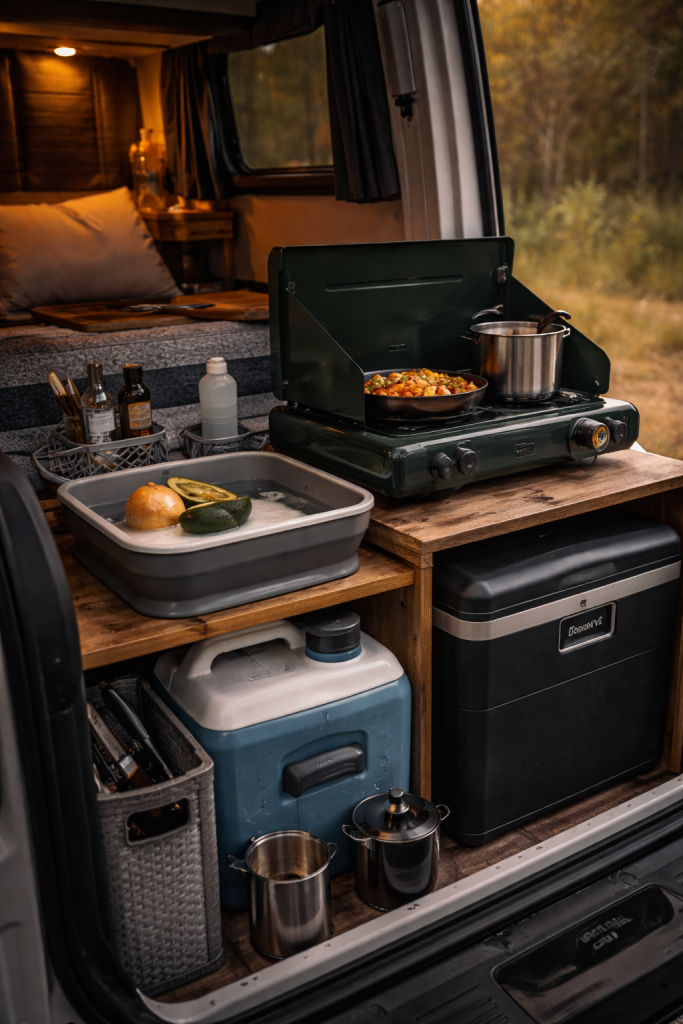
This post may contain affiliate links. If you buy through them, we may earn a commission at no extra cost to you.
Last updated: March 2026
Cooking in a van sounds more complicated than it needs to be.
A lot of beginners assume they need cabinets, counters, plumbing, drawers, and a built-in galley before they can make real meals on the road. That assumption creates cost, delay, and a lot of unnecessary decision fatigue.
Most people overbuild kitchens. What actually matters is whether you can cook consistently, clean up quickly, and keep food organized without turning every meal into a project.
This guide is a simple van life kitchen setup built around that reality. You do not need a full build. You need a few reliable parts that work together every day.
A good kitchen setup doesn’t impress people. It keeps you consistent.
What You Actually Need to Cook in a Van
A practical van life kitchen setup is not a room. It is a small system.
At the most basic level, you need five things: a heat source, a little cookware, a way to store food, access to water, and a cleanup method that does not make you dread cooking.
Your heat source lets you boil water, cook simple meals, and stop relying on gas station food. Your cookware needs to be compact enough to store easily but useful enough that you can cook more than one type of meal.
Food storage is what keeps the kitchen functional beyond one meal. It is also what determines how often you stop for groceries, how much ice you buy, and whether leftovers are realistic.
Water access and cleanup are where simple setups usually break down. If dishes are annoying, cooking gets skipped. If water is awkward, everything starts to feel heavier than it should.
That is why a van life cooking setup should be judged by repeatability. If it helps you cook and reset with low friction, it is working.
The 5 Core Parts of a Simple Van Kitchen
1. Portable Stove
For most beginners, a propane stove is the easiest starting point. It works right away, requires no build, and gives you a dependable heat source without dragging you into a full kitchen project.
The simplest answer is usually the best one here. A two-burner stove lets you boil water and cook a second item at the same time, but it still packs away when you are done.
The Coleman Classic Propane Stove is a strong beginner option because it is cheap, proven, and easy to understand. If your goal is learning how to cook in a van without overcomplicating it, this is the kind of tool that keeps you moving.
2. Basic Cookware
One pot and one pan are enough for a surprisingly long time. That covers coffee or oatmeal, pasta or rice, simple skillet meals, soups, eggs, vegetables, and reheated leftovers.
Most beginners buy too much cookware because they imagine every meal before they understand their actual cooking pattern. In practice, a simple van life kitchen works better when every piece has a clear job and stores easily.
The Stanley Adventure Even-Heat Camp Pro Cookset keeps things compact and durable without forcing you into a drawer full of kitchen clutter. It supports the kind of van life cooking gear that earns its space instead of creating more cleanup.
3. Food Storage (Fridge vs Cooler)
This is one of the biggest quality-of-life decisions in a van life cooking setup.
A cooler is cheaper up front, which makes it appealing for beginners. But it also brings recurring ice runs, wet food, inconsistent temperatures, and more daily maintenance. It can work for weekend travel, but it creates drag if you are cooking regularly.
A 12V fridge costs more, but it lowers friction fast. You shop less reactively, leftovers become useful, and your food system becomes more stable. That is why a fridge is often one of the best camper van kitchen ideas for people who want to stay simple long-term.
The BougeRV 12V Fridge is the easiest long-term move in this category because it cuts out the ice cycle and turns food storage into a repeatable system. If you want a deeper breakdown, use Best Overall 12V Fridge for Van Life.
4. Water System (Simple Setup)
You do not need plumbing to wash produce, boil water, brush your teeth, or clean a pan.
For most beginners, a water jug with a built-in spout is enough. It is easy to refill, easy to monitor, and easy to replace if your needs change later.
The Reliance Aqua-Tainer Water Container fits this kind of system well because it is simple, portable, and predictable. That matters more than sophistication in a simple van life kitchen.
5. Cleaning Setup
Cleanup is what decides whether you keep cooking or start defaulting to takeout.
If your van life kitchen setup has no clear reset process, dishes pile up, counters stay messy, and every meal feels slightly more annoying than the last. That is how a good cooking plan quietly dies.
A collapsible tub, a sponge, and a small bottle of soap are enough for most setups. A Collapsible Sink Tub gives you a contained wash space without requiring a permanent sink, which keeps the van life cooking setup portable and low-stress.
A Simple Daily Cooking Setup (Real Example)
A useful kitchen system should feel ordinary after a few days. That is the point.
In the morning, you pull out the stove, boil water, and make coffee. The pot gets rinsed right away. Nothing complicated happens, and nothing needs to be permanently installed.
Later, you make a basic meal. Maybe it is eggs and tortillas. Maybe it is rice, vegetables, and a quick protein in one pan. Maybe it is pasta in the pot and a simple skillet sauce beside it. The exact meal matters less than the sequence.
The sequence is what keeps the system calm: pull the stove out, grab one cooking vessel, pull ingredients from the fridge or cooler, use the water jug for quick rinse tasks, then reset immediately when the meal ends.
Cleanup stays light because the gear count stays low. One pan, one pot, one plate, one mug. Wash in the tub, dump gray water responsibly, wipe surfaces, and put everything back in its place.
This is what a real van life cooking setup should feel like. Not impressive. Not decorative. Just repeatable.
That repeatability matters more than almost any aesthetic kitchen upgrade. When the setup is easy to use, you cook more often. When you cook more often, the budget gets calmer and the van feels more livable.
One of the best camper van kitchen ideas is also one of the least glamorous: keep the whole system grouped together. Stove, fuel, lighter, pan, pot, sponge, and soap should live in one predictable zone or storage bin so setup takes less than two minutes. When the kitchen is easy to deploy, it gets used on tired days too.
Common Mistakes Beginners Make
- Overbuilding before they understand how they actually cook
- Buying too much gear and making storage harder than it needs to be
- Ignoring cleanup and assuming they will “figure it out later”
- Having no consistent system for where the stove, cookware, water, and dishes live
- Relying on eating out because the kitchen setup is too annoying to use
Most of these mistakes come from the same place: trying to solve an identity problem instead of a systems problem. A van kitchen does not need to feel complete. It needs to function.
Simple Van Kitchen Starter Setup
- Coleman Classic Propane Stove – simple, reliable heat without a build
- Stanley Adventure Even-Heat Camp Pro Cookset – enough cookware without clutter
- BougeRV 12V Fridge – the easiest long-term food storage upgrade
- Reliance Aqua-Tainer Water Container – simple water access without plumbing
- Collapsible Sink Tub – portable cleanup that keeps the reset process easy
Do You Need a Built-In Kitchen?
No. A built-in kitchen is not required to cook well in a van.
Many people stay portable for a long time because portable systems are easier to change, easier to clean, and easier to troubleshoot. That flexibility matters when your routine is still evolving.
Built-ins can look clean, but they also add cost, storage decisions, permanent layout constraints, and more things to commit to before you have enough real-world usage data.
If your goal is to start van life sooner or simplify your current build, staying portable is often the smarter systems choice. Complexity should be earned.
FAQ
1. How do you cook in a van?
Most people cook in a van with a portable stove, a small cookware kit, simple water storage, and either a cooler or a 12V fridge. The key is not fancy equipment. The key is having a setup that is fast to use and fast to reset.
2. Do you need a kitchen in a camper van?
No, not in the built-in sense. You need a cooking system, but it does not have to be permanent. A portable van life kitchen setup can handle daily meals just fine if the parts are chosen well.
3. What is the easiest van life cooking setup?
The easiest setup is usually a propane stove, one pot, one pan, a water jug, and a simple cleanup tub. That combination covers most meals without forcing a complicated build. It is a strong answer for beginners who want simple van life cooking gear that actually gets used.
4. Can you cook without propane?
Yes, but the alternatives usually create tradeoffs. Electric cooking increases power demand, and solid-fuel options are often slower or less convenient. For most beginners, propane stays the simplest and most practical place to start.
5. Is a fridge worth it in van life?
For many people, yes. A fridge reduces food waste, removes the ice cycle, and makes consistent cooking easier. It costs more up front, but it lowers daily friction in a way that a cooler usually does not.
6. How do you wash dishes in a van?
Most people use a water jug, a small amount of soap, and a collapsible tub or bin. The important part is having a repeatable cleanup flow right after cooking. If dishes linger, the whole kitchen gets harder to use.
Related Guides
- Real van life budget and startup costs
- How much power you actually need in a van
- Best van life internet setup for remote work
- Van life gear starter kit
Final Thoughts
Keep it simple.
A van kitchen works best when it reduces friction instead of adding identity pieces you have to maintain. Consistency matters more than complexity, especially when space is tight and your energy is limited.
When the system is small, clear, and easy to reset, cooking becomes normal. That is what makes van life sustainable.